

The Vatican is in crisis mode as a flood of AI deepfakes targeting Pope Leo XIV spreads rapidly across social media platforms — from YouTube to X — portraying the pontiff saying and doing things he never has.
These fabricated videos, created using advanced artificial intelligence, show Pope Leo XIV commenting on everything from theology to politics. Some clips are harmless, while others are alarmingly deceptive — including one viral 25-minute video claiming he had “broken silence” on the supposed murder of Charlie Kirk, which racked up over 445,000 views in a week.
The Vatican Sounds the Alarm
According to the Dicastery for Communication, hundreds of fake channels have been reported — yet new ones pop up almost as fast as old ones are removed.
“We are witnessing an exponential proliferation of fake videos using AI to make the pope say things he never said,” the Vatican’s communications team stated.
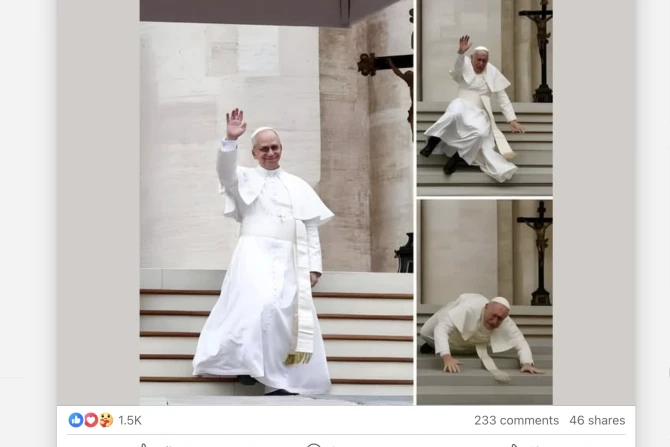
Even Pope Leo XIV himself has faced confusion. In a recent interview, he shared that a friend once called to ask if he was injured — after seeing AI-generated images of him “falling down the stairs” outside St. Peter’s Basilica. The Pope later laughed it off, but the incident underscores a serious issue: how believable deepfakes have become.
Vatican Urges Media Literacy and Awareness
In its monthly newsletter, the Vatican warned followers about the growing number of fake posts and encouraged the faithful to report suspicious videos.
“Our team receives dozens of reports daily about fake accounts using AI to mimic the pope’s voice and image,” it said. “Given the sheer volume, it’s impossible to debunk every fake.”
The Vatican is now focusing on media literacy — teaching people to identify false content and to verify information through trusted sources like Vatican News and CNA.
“If it’s not on official channels, it’s probably fake,” the Dicastery added.
A Widening Threat of AI Deepfakes
AI Deepfake technology — which uses AI to create hyper-realistic fake videos and audio — is not new. But experts warn that its sophistication and accessibility have exploded.
One of the earliest viral examples featuring Pope Leo appeared shortly after his election, falsely showing him praising Burkina Faso’s coup leader. The video amassed over a million views before YouTube removed the channel.
Earlier popes, too, have been victims of digital manipulation — from Pope Francis’ viral “puffer coat” photo to edited clips aired on talk shows. But what’s different now is scale and speed: AI tools can generate realistic fakes in minutes.
The Vatican’s Next Step
The Vatican’s communications office says it’s developing stricter protocols to detect and counter AI-generated misinformation — possibly even collaborating with AI ethics groups and fact-checkers.
Still, as the digital tide rises, officials admit that no system can catch everything. The real defense, they say, lies in public vigilance.
“Artificial intelligence is reshaping media,” one Vatican spokesperson said. “But so must our awareness.”