

Just a few months ago, the OpenAI Sora app looked unstoppable. The AI-powered video creation platform rocketed to the top of the App Store, shattered download records, and was widely hailed as the “TikTok of AI video.”
Now, the momentum is slipping.
New market data shows the OpenAI Sora app is struggling with declining downloads and falling consumer spending as the initial excitement begins to wear off.
From No. 1 on the App Store to a Sharp Slowdown
Powered by OpenAI’s Sora 2 video generation model, the iOS-only app crossed 100,000 installs on day one—despite being invite-only. It quickly climbed to the No. 1 spot on the U.S. App Store and reached 1 million downloads faster than ChatGPT, an achievement that stunned the AI industry.
But that growth didn’t last.
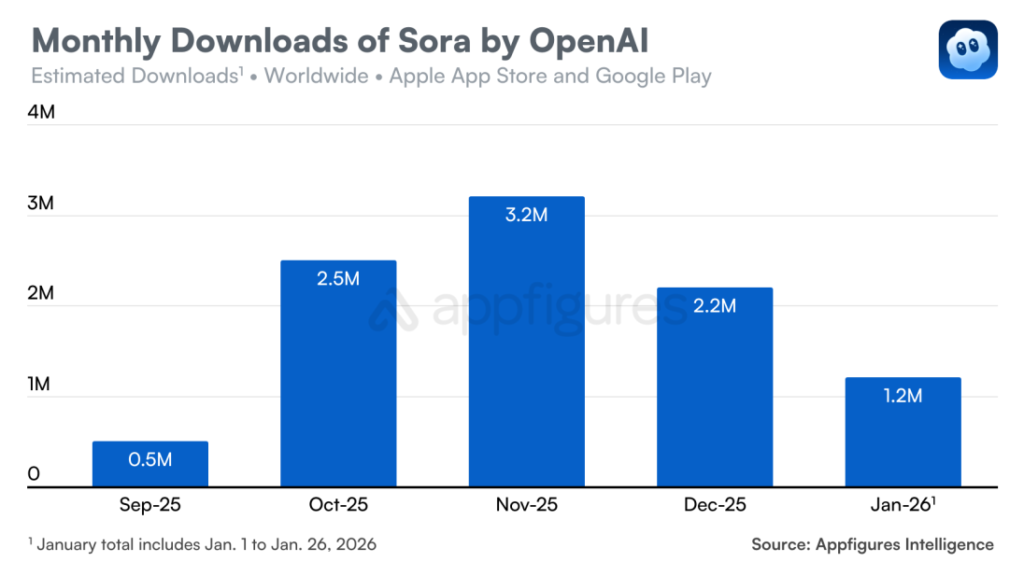
According to Appfigures, downloads of the OpenAI Sora app fell:
- 32% month-over-month in December
- 45% month-over-month in January 2026, dropping installs to about 1.2 million
Even more concerning, consumer spending dropped 32% over the same period—an unusual trend during the holiday season, typically a high-growth window for mobile apps.
Revenue Drops Despite Millions of Installs
So far, the OpenAI Sora app has generated:
- 9.6 million total downloads across iOS and Android
- $1.4 million in lifetime consumer spending
The U.S. remains Sora’s strongest market, accounting for $1.1 million of that total, followed by Japan, Canada, South Korea, and Thailand.
However, monthly revenue peaked at $540,000 in December and slid to $367,000 in January, reinforcing concerns about long-term retention.
On the U.S. App Store, Sora has slipped out of the Top 100 free apps, currently hovering around No. 101, while ranking No. 7 in the Photo & Video category. On Google Play, its performance is weaker, sitting near No. 181 overall.
Why the OpenAI Sora App Is Losing Momentum
Several factors appear to be working against the OpenAI Sora app at the same time:
1. Fierce AI Competition
Google’s Gemini app, especially its Nano Banana video model, has surged in popularity. Meanwhile, Meta AI boosted its own engagement with AI-powered video features just as Sora launched, fragmenting user attention.
2. Copyright Crackdowns Reduced Viral Content
Early growth was fueled by users generating videos with famous characters like SpongeBob and Pikachu. But copyright pressure from Hollywood forced OpenAI to shift from an opt-out to an opt-in IP model—dramatically limiting creative freedom.
Although OpenAI later announced a Disney partnership, allowing select character use, it hasn’t meaningfully boosted installs or revenue so far.
3. User Discomfort With AI Likeness Sharing
Sora’s unique feature—letting users and friends appear in AI-generated videos—also turned some people off. Many users weren’t comfortable having their likeness remixed, even by friends, dampening long-term engagement.
Is the OpenAI Sora App in Trouble?
The numbers don’t suggest the OpenAI Sora app is “dead”—but they do signal a reality check.
What was once framed as a disruptive AI social network now faces the same challenges as many viral apps: retention, trust, competition, and content limits. Whether Sora can rebound will likely depend on:
- New creative tools
- Broader licensing deals
- Smarter monetization
- A clearer social identity beyond novelty
For now, the app’s future remains uncertain—but far from decided.

Don’t miss out on our latest news—follow us for the latest AI news, breakthroughs, and insights that matter.