

For years, digital advertising has become hyper-personalized, while websites—the final destination for that traffic—have largely stayed static. Fibr AI is built to close that gap, and the idea has convinced Accel to double down on the startup.
Accel has led Fibr AI’s $5.7 million seed round, following its earlier $1.8 million pre-seed investment in 2024. The round also saw participation from WillowTree Ventures, MVP Ventures, and several Fortune 100 operators joining as angels and advisors. With the new raise, the company’s total funding now stands at $7.5 million.
The renewed backing signals confidence in Fibr AI’s core thesis: that AI agents, not human-heavy teams, are the future of website personalization.
The Problem With Today’s Websites
Enterprises today can spin up hundreds of personalized ads in real time—but once a user clicks through, they usually land on the same generic webpage as everyone else. Bridging that gap has traditionally required a costly mix of personalization software, marketing agencies, and engineering teams.
That approach is slow, expensive, and hard to scale. Most large companies can only run a handful of website experiments each year, even as customer behavior changes daily.
Fibr AI argues that this model is fundamentally broken.
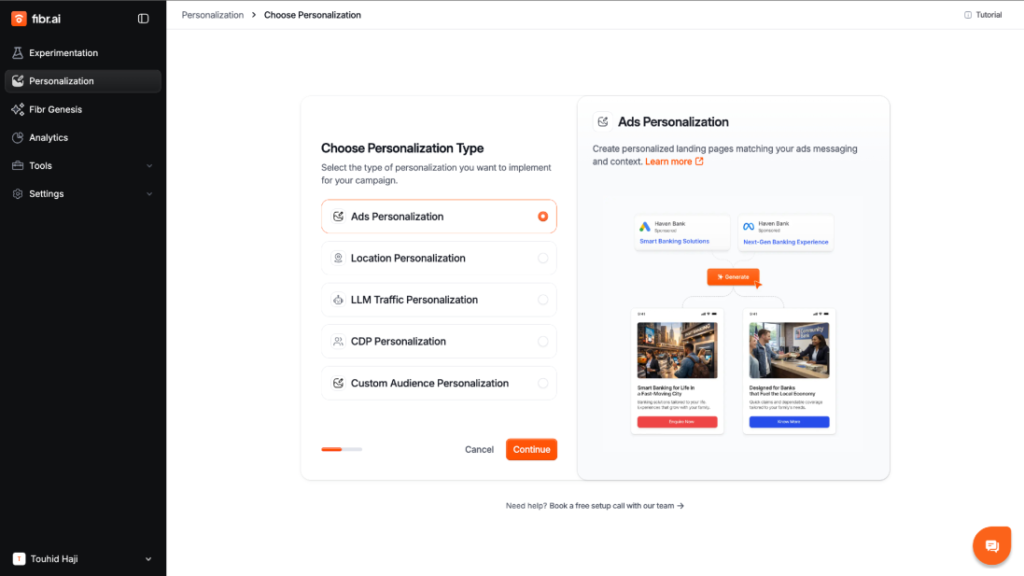
Image Credits: Fibr AI
How Fibr AI Works
Instead of relying on manual rules or sequential A/B tests, Fibr AI uses autonomous AI agents that operate continuously. The platform sits as a layer on top of an existing website and connects with a company’s advertising, analytics, and customer data systems.
From there, its agents:
- Infer visitor intent based on traffic source and context
- Generate multiple versions of copy, layout, and imagery
- Run thousands of micro-experiments in parallel
- Continuously optimize pages in real time
Each webpage is treated not as a static asset, but as a living system that learns and adapts with every visit.
“We are the software, and the agency is the workforce of agents we’re deploying,” said Ankur Goyal, co-founder and CEO of Fibr AI, in an interview.
Early Traction Was Slow—Then It Clicked
Founded in early 2023 by Goyal and Pritam Roy, Fibr AI spent much of its first two years with just one or two customers. Large enterprises were cautious, taking time to evaluate whether agent-driven personalization could be trusted.
That began to change last year.
Adoption picked up among large U.S. enterprises, including banks and healthcare providers, bringing the total customer count to 12. These customers are now signing three- to five-year contracts, treating Fibr AI as standardized website infrastructure rather than an ongoing experiment.
“Once it’s set up, nobody wants to think about it again,” Goyal said.
Why Accel Is Doubling Down
For Accel, the appeal isn’t just AI hype—it’s the operating model.
“Advertising today is one-to-one, but websites are still one-to-many,” said Prayank Swaroop, partner at Accel. “You can create hundreds of ads, but they all land on the same page.”
Fibr AI’s agent-driven approach removes the traditional bottlenecks of agencies and engineering teams, allowing experimentation to scale almost infinitely. Early adoption in highly regulated industries helped validate the approach.
“When banks and healthcare companies say they need this and are willing to pay for it, that’s when we feel confident doubling down,” Swaroop added.
Cost, Outcomes, and a Shift in Metrics
Traditional website personalization ties cost to people—agency retainers, developer time, and software licenses. Fibr AI flips that equation.
Enterprises are increasingly evaluating the platform based on:
- Cost per experiment
- Conversion uplift
- Revenue impact
rather than headcount or tool sprawl. That shift aligns closely with how CFOs and growth leaders now think about ROI.
Preparing for an Agentic Web Future
While most of Fibr AI’s impact today is on human visitors, Accel and the startup are also thinking ahead. As users increasingly rely on AI tools like ChatGPT to research and shortlist products before visiting a site, websites may soon need to adapt not just to people—but to AI agents acting on their behalf.
That future is still early, but Swaroop believes companies that solve today’s problems while preparing for that shift will have a lasting edge.
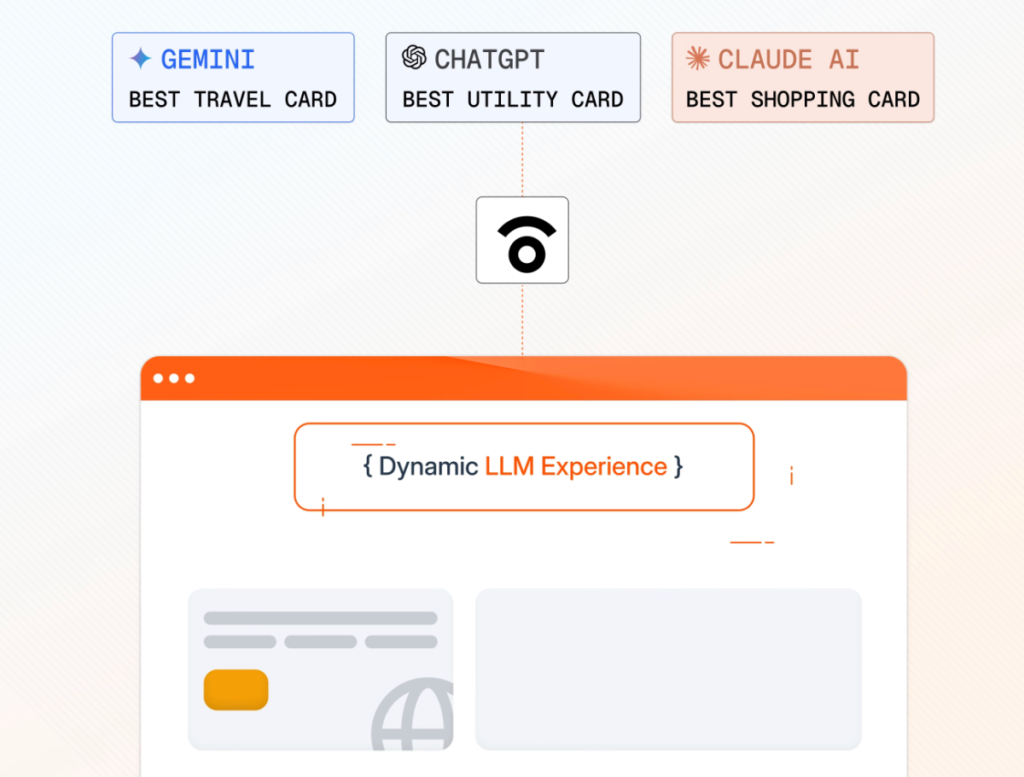
Image Credits: Fibr AI
What’s Next for Fibr AI
With fresh capital, Fibr AI plans to:
- Expand sales and customer teams in the U.S.
- Continue technical development in India
The San Francisco–headquartered startup operates a Bengaluru office, with 17 of its 23 employees based in India. Goyal said the company is targeting $5 million in ARR by year-end and aims to grow to around 50 enterprise customers.
Fibr AI is entering a market dominated by incumbents like Adobe and Optimizely. But both Accel and the founders argue those platforms are constrained by legacy, agency-dependent models that struggle to keep pace with modern experimentation demands.

Don’t miss out on our latest news—follow us for the latest AI news, breakthroughs, and insights that matter.