

Amazon is giving users more control over how their AI speaks back to them. The company has introduced Alexa+ personality styles, a new feature that allows people to adjust the tone and character of its upgraded AI assistant.
The rollout includes three initial options — Brief, Chill and Sweet — each designed to shape how Alexa responds in everyday interactions. The move reflects growing demand for AI assistant tone customization, while also reopening conversations about AI chatbot personality mental health risks.
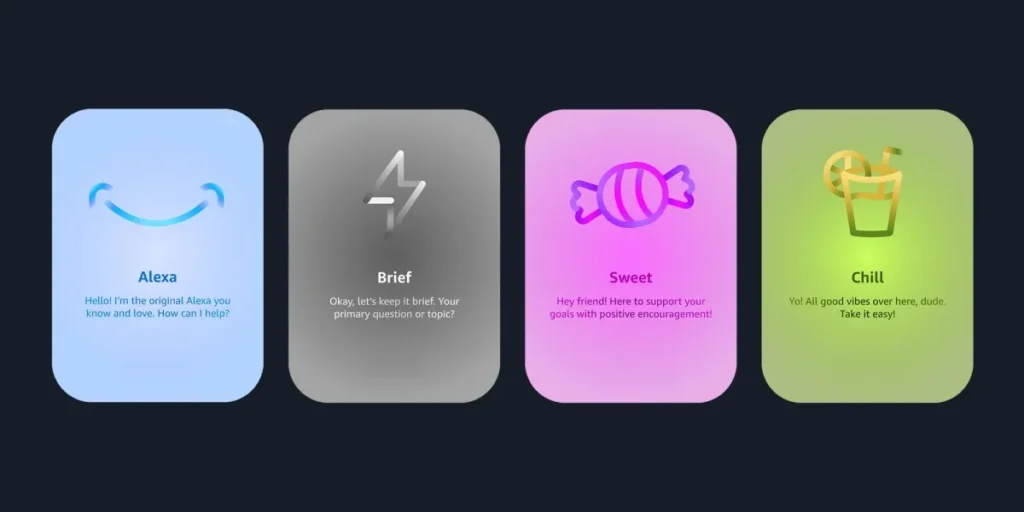
Alexa+ Personality Styles Explained
With Alexa+ personality styles, users can now tailor responses to better match their preferences.
The Brief setting delivers shorter, more direct replies. Chill adopts a relaxed, laid-back tone, resembling a friendly conversation. Sweet shifts toward warmth and encouragement, offering a more enthusiastic and positive delivery style.
Amazon says these styles are built around five dimensions that define the assistant’s behavior: expressiveness, emotional openness, formality, directness and humor. Each preset represents a specific balance across those traits. For example, Brief combines conciseness with casual directness and minimal humor.
Users can switch between styles by speaking directly to an Echo device or by navigating to the Personality Style option within the Alexa app’s Device Settings.
Currently, the feature is available in the United States, with Amazon signaling that additional personality options are likely to follow.
AI Assistant Tone Customization Reflects User Demand
The launch of Alexa+ personality styles highlights how much users care about AI assistant tone customization. Many chatbot users already provide custom instructions to influence how systems respond, adjusting warmth, emoji use or conversational energy.
OpenAI, for example, introduced tone controls for ChatGPT in December, allowing users to modify base style settings such as enthusiasm and emotional tone. However, some users have criticized recent versions of AI models for being overly reassuring by default.
The broader pattern suggests that personalization is becoming central to AI product design, not just a cosmetic add-on.
AI Chatbot Personality Mental Health Risks Remain a Concern
Despite the appeal of customization, AI chatbot personality mental health risks remain part of the conversation.
Highly affirming or flattering AI models have previously raised concerns among experts and users. In some reported cases, overly supportive chatbot interactions allegedly contributed to unhealthy dependency or worsened existing mental health issues. Lawsuits have referenced extreme outcomes linked to prolonged chatbot engagement.
Mental health researchers and ethicists have emphasized that conversational AI tools are not substitutes for professional therapy or human relationships. While AI assistant tone customization can improve user comfort, it also requires careful calibration to avoid reinforcing isolation or emotional overreliance.
Amazon has not positioned Alexa+ personality styles as therapeutic tools. Instead, the company frames them as usability enhancements grounded in adjustable communication styles.
Personalization as the Next AI Battleground
Alexa+ personality styles represent a broader industry shift toward adaptable AI interfaces. Rather than delivering a single static persona, companies are experimenting with modular personality layers that users can fine-tune.
The challenge for tech firms will be balancing user preferences with safeguards around AI chatbot personality mental health risks. As personalization deepens, oversight and responsible deployment become even more critical.
For now, Amazon’s update signals that tone and personality are no longer secondary features. They are becoming core components of how AI assistants compete for daily engagement.

Don’t miss out on our latest news—follow us for the latest AI news, breakthroughs, and insights that matter.