

Google has officially rolled out Google Nano Banana 2 image generation, marking a major upgrade to its popular visual AI model. Technically known as Gemini 3.1 Flash Image, the latest version promises faster performance, improved realism, and deeper creative control.
More importantly, it is now the Gemini AI image generation default model across the Gemini app’s Fast, Thinking, and Pro modes.
Google Nano Banana 2 Image Generation Gets Faster and Smarter
First introduced in August 2025, Nano Banana quickly became a hit, driving millions of image creations inside the Gemini app, particularly in markets like India. A Pro version followed in November, offering higher detail and advanced capabilities.
With Google Nano Banana 2 image generation, Google blends the high-fidelity qualities of the Pro version with significantly improved speed. Users can now generate images ranging from 512px to full 4K resolution across multiple aspect ratios.
The model supports character consistency for up to five characters and maintains fidelity across as many as 14 objects within a single workflow. That’s particularly useful for storytelling, marketing visuals, or multi-scene compositions where consistency matters.
Google says users can also submit more complex prompts, enabling nuanced image creation with enhanced lighting, richer textures, and sharper detail.
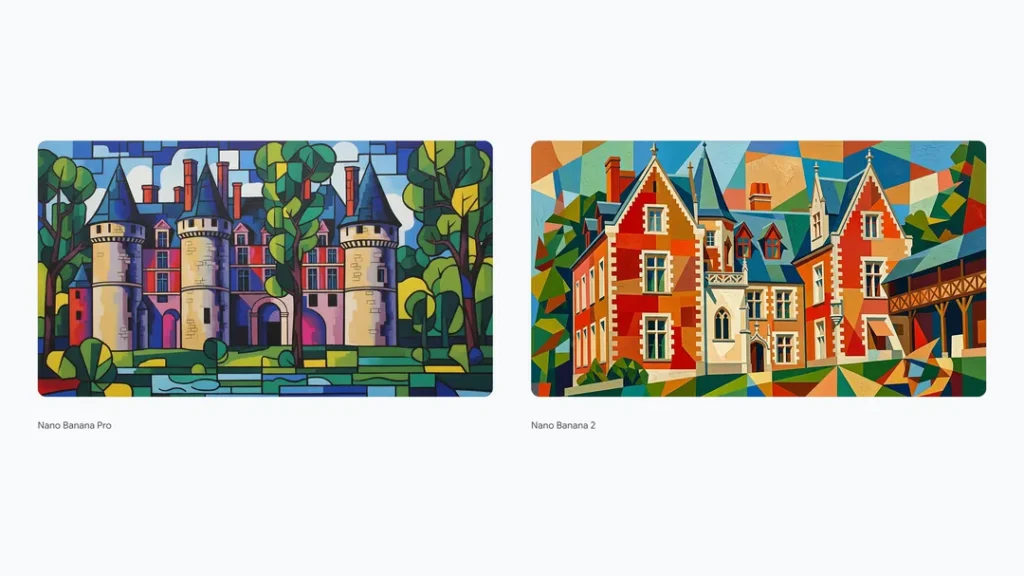
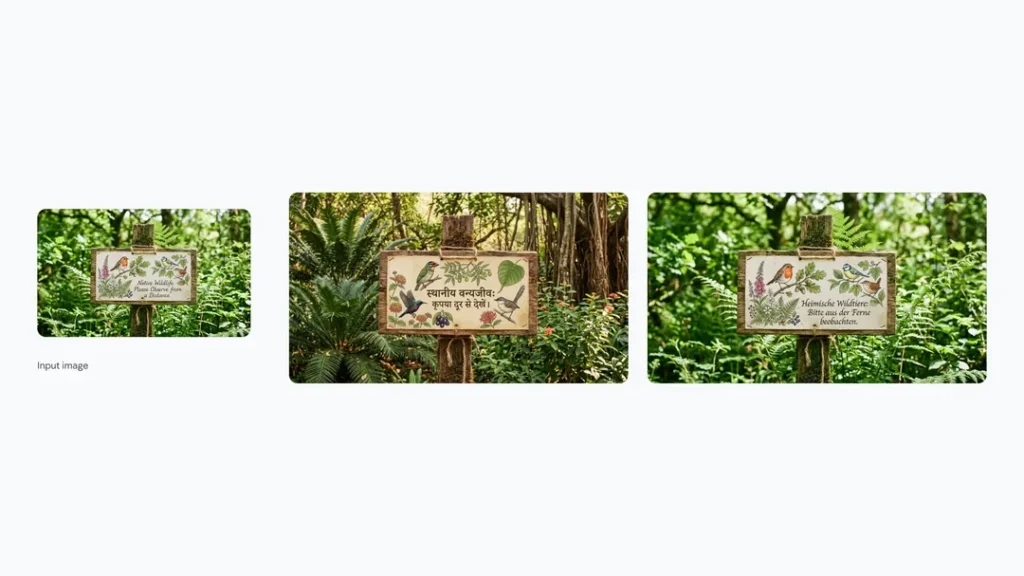
Gemini AI Image Generation Default Model Across Platforms
One of the biggest shifts is platform-wide adoption. Google Nano Banana 2 image generation is now the Gemini AI image generation default model not just in the Gemini app but also in Google’s video editing tool Flow.
In Search, the model becomes the default for Google Lens and AI Mode results across 141 countries, available on both desktop and mobile. This expansion signals how central image generation has become to Google’s broader AI ecosystem.
Subscribers to Google AI Pro and Ultra plans can still access Nano Banana Pro for more specialized use cases by manually regenerating images via the app interface.
For developers, preview access is available through the Gemini API, Gemini CLI, Vertex API, AI Studio, and Antigravity — Google’s development platform launched last November.
SynthID AI Watermark C2PA Credentials Add Transparency
As generative AI adoption scales, so do concerns around authenticity and attribution. Every output from Google Nano Banana 2 image generation includes a SynthID AI watermark C2PA credentials layer.
SynthID embeds an invisible digital watermark to identify AI-generated content. Additionally, the images are interoperable with C2PA Content Credentials, an industry-backed standard supported by organizations including Adobe, Microsoft, Google, OpenAI, and Meta.
Google reports that since introducing SynthID verification inside the Gemini app in November, users have utilized the verification feature more than 20 million times. This suggests growing awareness around AI content transparency.
Industry analysts, including research cited by organizations like the World Economic Forum, have consistently emphasized watermarking and content authentication as critical safeguards in the era of generative AI. Google’s integration of SynthID AI watermark C2PA credentials aligns with those recommendations.
A Strategic Move in the AI Image Race
By making Google Nano Banana 2 image generation the Gemini AI image generation default model, Google is standardizing its visual AI infrastructure across products.
The combination of faster rendering, higher visual fidelity, and built-in content credentials positions the model not just as a creative tool but as a scalable enterprise-ready system.
As image generation becomes deeply embedded in search, editing, and developer workflows, Google’s approach suggests a long-term strategy centered on performance, accessibility, and accountability.

Don’t miss out on our latest news—follow us for the latest AI news, breakthroughs, and insights that matter.