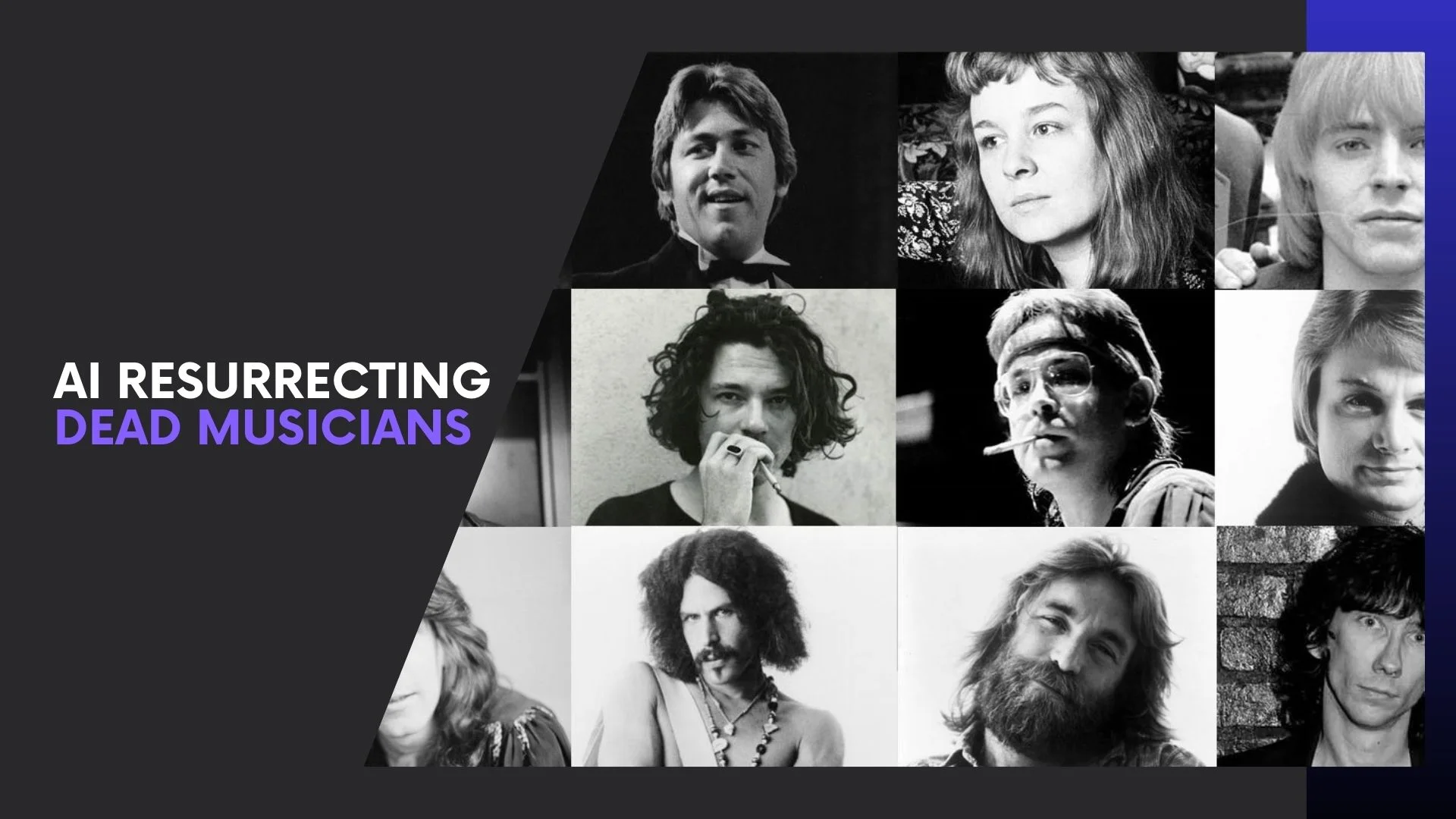
Imagine being at a concert where your favorite late artist steps on stage again — not through old footage, but as a lifelike hologram singing a brand-new track. That’s the power of AI resurrecting dead musicians — technology that’s merging nostalgia with innovation.
From Tupac’s Coachella performance to The Beatles’ AI-assisted “Now and Then”, and Whitney Houston’s hologram tour, AI is giving deceased musicians a second act. Through hologram concerts and AI-generated albums, their voices and performances are being reborn with stunning realism.
But as breathtaking as it sounds, it raises critical questions: Who owns these digital resurrections? Are they tributes or recreations? In this article, we’ll explore how AI makes this possible, showcase real examples, and uncover what it means for the future of music.
The Technology Behind AI Resurrections
So, how does AI resurrecting dead musicians actually work? It’s a fusion of sound engineering, deep learning, and holographic artistry — all designed to make legends perform again.
A. Recreating Voices and Music
AI tools like OpenAI’s Jukebox and Suno study hours of archived vocals to replicate a singer’s tone and style. They can clean old demos, generate harmonies, and even compose new tracks — resulting in stunning AI-generated albums.
One standout case is The Beatles’ “Now and Then”, where AI isolated John Lennon’s voice from an old cassette, letting the band finish the song decades later.
B. Holograms Bring Them to Life
For live shows, hologram concerts use motion capture and CGI to project realistic 3D versions of deceased musicians on stage. From Tupac’s Coachella debut to Whitney Houston’s hologram tour, these performances show how posthumous hologram music tour technology can make history come alive.
Top Examples of AI Resurrecting Dead Musicians
Across the music world, AI resurrecting dead musicians has brought unforgettable legends back to life — both on stage and in the studio. Here are some standout moments reshaping music history.
1. Tupac Shakur – The Hologram That Started It All
At Coachella 2012, a realistic hologram of Tupac stunned the crowd, performing beside Snoop Dogg. It was the first major hologram concert, proving digital resurrection could feel real.
2. Whitney Houston – AI Voice, Real Emotion
The Whitney Houston Hologram Tour in 2020 combined AI-synthesized vocals with CGI visuals. Fans described it as “beautifully haunting,” showing how AI-generated albums and holograms can extend an artist’s legacy.
3. The Beatles – Lennon’s Voice Reborn
In “Now and Then” (2023), AI extracted John Lennon’s voice from an old cassette, letting Paul and Ringo finish the track. It became a milestone in AI resurrecting dead musicians with authenticity.
4. Elvis Presley & ABBA – Icons Reimagined
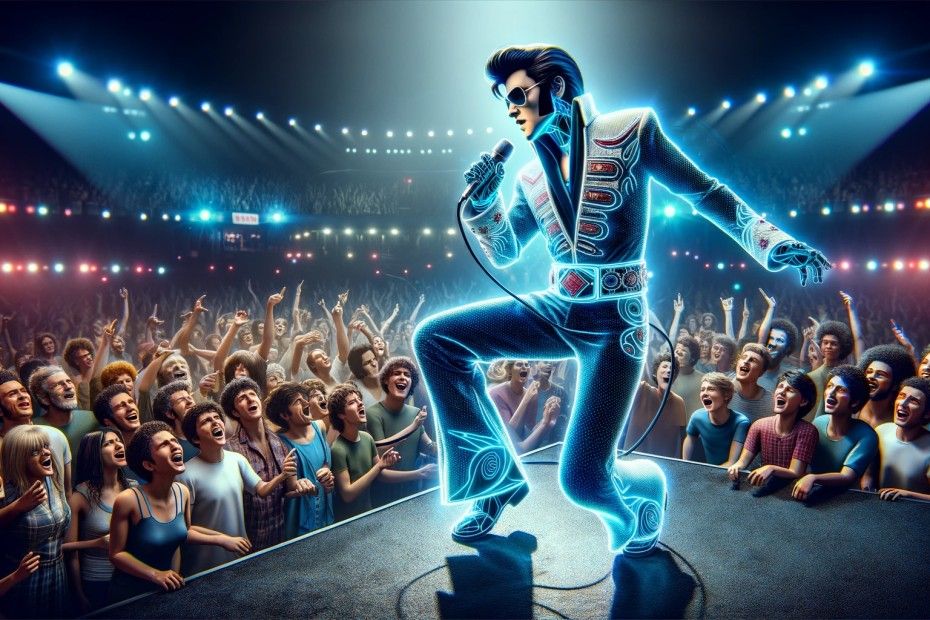
Elvis Presley’s digital likeness and ABBA Voyage’s “ABBAtars” showcase how posthumous hologram music tour technology can let even deceased musicians perform again for new generations.
These examples prove that with AI, music doesn’t die — it evolves.
Inside the Studio: How AI-Generated Albums Are Created
Behind every lifelike performance or new release from a late artist lies a careful mix of data science and creativity. AI-generated albums aren’t random outputs — they’re crafted through months of technical work, collaboration, and ethical review. Here’s how the magic happens.
1. Gathering the Source Material
Producers start with archived vocals, demo tapes, interviews, or even live performances. These recordings help AI understand a deceased musician’s vocal range, tone, and emotional delivery.
2. Training the AI Model
Once the data is prepared, engineers feed it into neural networks — tools like OpenAI’s Jukebox, Suno, or custom models built for music synthesis. The AI learns the artist’s unique patterns:
- Vocal phrasing and pitch shifts
- Signature harmonies and rhythm styles
- Lyric and melody tendencies
This process gives the AI a musical “memory” of the artist.
3. Generating and Refining the Music
The trained model produces new melodies, lyrics, and vocal snippets. Human producers then step in to:
- Choose the best AI outputs
- Mix and master with real instruments
- Maintain emotional integrity and artistic tone
The result is a seamless fusion of human direction and AI precision — what fans now call AI resurrecting dead musicians in studio form.
4. From Digital File to Stage Performance
After production, some tracks inspire hologram concerts, using posthumous hologram music tour technology to visualize the artist performing the newly generated songs live.
With these techniques, we’re not just hearing echoes of the past — we’re witnessing a rebirth of creativity powered by technology.
The Ethics: Should We Let AI Bring Back the Dead?
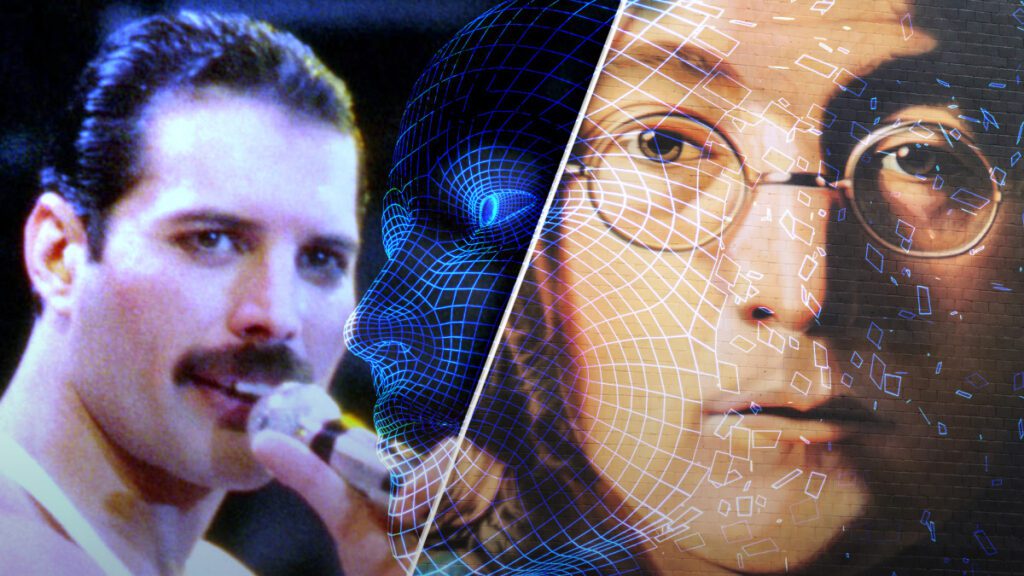
As incredible as AI resurrecting dead musicians may sound, it also opens a Pandora’s box of moral and legal dilemmas. Can we — and should we — bring artists back after they’re gone?
1. Consent and Artistic Integrity
One of the biggest ethical questions is consent. Most deceased musicians never agreed to have their voices or images recreated by machines. Families and estates often approve these projects, but critics argue that digital resurrections may distort an artist’s original intent.
Example: Some fans celebrated the Whitney Houston hologram tour, while others felt it crossed a line — turning a legacy into a product.
2. Are These Tributes or Exploitations?
For many fans, hologram concerts feel like heartfelt homages that keep an artist’s spirit alive. For others, they seem commercial — especially when AI-generated content is released without clear creative oversight.
The debate boils down to this: are we honoring the music or monetizing memory?
3. Ownership and Royalties
Who owns an AI-generated song — the engineers, the record label, or the late artist’s estate? Current copyright laws lag far behind AI innovation.
With AI-generated albums, labels are pushing for new frameworks where AI acts as a “creative collaborator,” but this raises deeper questions about originality and authorship.
4. Emotional Impact on Fans
Seeing or hearing a dead artist perform again can be emotional — sometimes healing, sometimes unsettling. Psychologists note that while these shows offer closure, they can also blur the line between reality and simulation, making grief more complex.
Ultimately, the ethics of AI resurrecting dead musicians lie in balance — between tribute and exploitation, between art and artificiality. As technology advances, transparency and respect for legacy will be key to ensuring these digital revivals remain meaningful, not manipulative.
The Future of Music: What’s Next for AI and Legacy Artists
The rise of AI resurrecting dead musicians is transforming the music world — not just by reviving the past, but by reimagining its future.
1. AI Collaborations Across Time
Producers are now pairing deceased musicians with today’s stars to create stunning duets and remixes. Imagine Freddie Mercury singing with Billie Eilish or Elvis Presley performing alongside Ed Sheeran — all powered by AI-generated albums.
2. Virtual & Holographic Concerts
The next wave of hologram concerts will merge with VR and AR, allowing fans to step into immersive, 360-degree performances featuring their favorite legends. This posthumous hologram music tour technology could redefine live shows entirely.
3. Protecting Digital Legacies
AI isn’t just reviving voices — it’s preserving them. New “digital estates” are emerging to manage how AI resurrecting dead musicians is handled ethically, ensuring respect and creative integrity for future generations.
AI is turning nostalgia into innovation — proving that even in death, music can evolve, connect, and inspire anew.
Conclusion — When Technology Meets Immortality
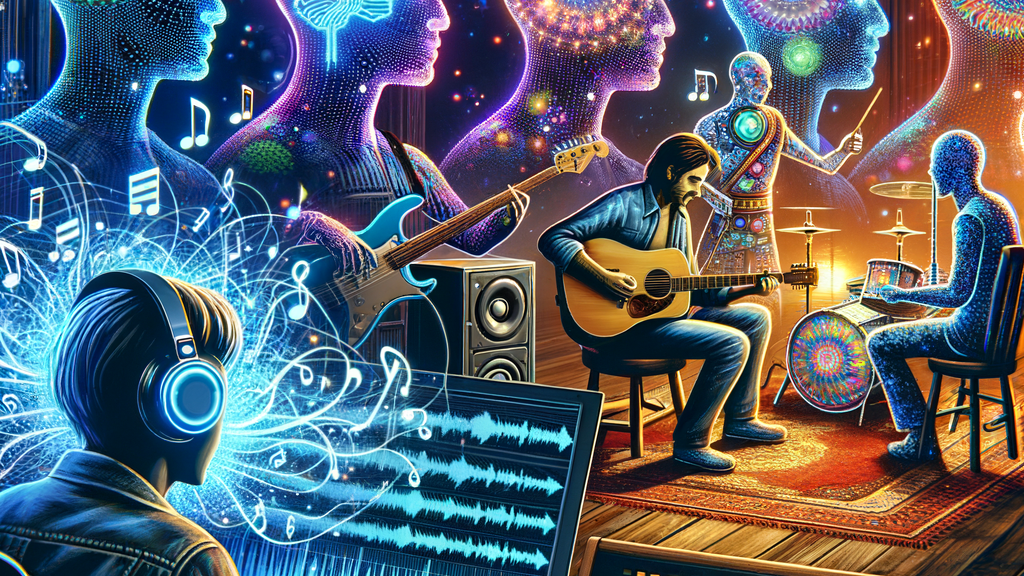
AI resurrecting dead musicians has blurred the line between memory and reality, transforming how we experience art, nostalgia, and legacy. Through hologram concerts, AI-generated albums, and next-gen production tools, technology is giving timeless voices a second life — one note, one lyric at a time.
We’re witnessing a new era where creativity doesn’t end with mortality. From Tupac’s hologram debut to The Beatles’ AI-assisted comeback, these digital revivals remind us that music, at its core, is eternal.
Yet, as breathtaking as it is, this innovation demands care — ethical boundaries, transparency, and respect for the legacies being reborn. After all, AI resurrecting dead musicians isn’t just about technology; it’s about emotion, memory, and the human connection that music creates.
As fans, we’re not just watching history repeat — we’re part of a future where art never dies, it simply transforms.