
Artificial Intelligence is rewriting how the world works—automating tasks, transforming industries, and attracting billions in investment. Yet behind the optimism, a question looms: is the AI bubble about to burst?
Fueled by the success of tools like ChatGPT and Midjourney, AI valuations have skyrocketed, with startups raising massive funding rounds at record speeds. But experts warn of an artificial intelligence bubble, where hype is outpacing real-world impact.
Reports from McKinsey and CB Insights reveal a growing divide — while some firms see productivity gains, many struggle to integrate AI profitably. That imbalance between expectations and outcomes hints at early AI investment bubble risks.
In this article, we’ll explore whether the AI bubble is truly forming, what signs to watch for, and how tech leaders can stay prepared if the hype finally deflates.
Understanding the AI Bubble
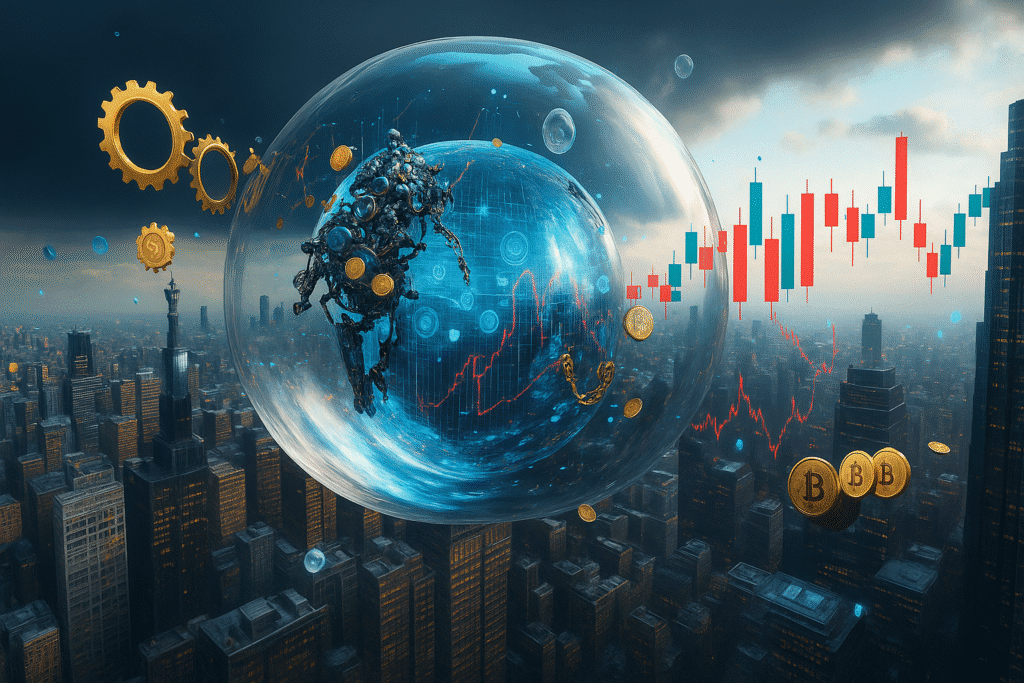
The AI bubble refers to the rapid rise in excitement and overvaluation surrounding artificial intelligence. Similar to the dot-com boom, many AI startups today attract huge investments despite lacking proven revenue models.
An artificial intelligence bubble forms when hype grows faster than results. Reports from Crunchbase show global AI funding exceeded $50 billion in 2024, even as real-world adoption remains uneven.
The real concern isn’t growth—it’s sustainability. Experts warn of AI investment bubble risks, where inflated valuations could lead to sharp corrections once investor optimism cools.
Analysts at Gartner note that AI is nearing the peak of its “hype cycle,” a stage where expectations often outstrip what technology can currently deliver. Recognizing this balance between promise and speculation helps tech leaders identify which AI innovations are built to last—and which might fade once the hype settles.
The Rise of the AI Hype Cycle
The AI bubble didn’t form by accident—it grew from a surge of innovation and investor enthusiasm. When ChatGPT launched in 2022, it showcased AI’s creative potential, triggering massive interest across industries.
Venture capital soon followed. As reported by PitchBook, AI startups raised billions within months, and Big Tech giants like Google and Microsoft accelerated their own AI bets. This rapid funding wave became the hallmark of the AI hype cycle, where excitement often outpaces measurable value.
Social media amplified the trend. Every week, a new “game-changing” AI tool went viral—driving speculation and heightening AI investment bubble risks.
While AI’s impact is real, not every innovation will stand the test of time. The current challenge for tech leaders is separating sustainable progress from short-term hype before valuations outgrow reality.
Signs the AI Bubble Might Be Inflating
Every economic bubble shows early warning signs — and the AI bubble is no exception. While innovation in artificial intelligence continues at a rapid pace, several indicators suggest the market could be overheating.
1. Skyrocketing Valuations Without Revenue
Many AI startups are reaching billion-dollar valuations with little to no profit. Reports from CB Insights reveal that over 60% of newly funded AI companies in 2024 had no sustainable revenue model. This mirrors classic bubble behavior, where optimism replaces fundamentals.
2. Investor FOMO and Speculative Funding
The fear of missing out is driving investors to back any company with “AI” in its pitch deck. Such speculative enthusiasm inflates prices and amplifies AI investment bubble risks, especially for startups without proven results or real-world use cases.
3. Corporate Overreliance on AI Narratives
Even established tech firms are repositioning their entire branding around AI to attract attention. In some cases, “AI-washing” — exaggerating AI capabilities to boost investor confidence — has become a marketing tactic.
4. Market Corrections and Layoffs
Despite heavy AI investments, many major tech companies have begun restructuring or cutting jobs to offset rising operational costs. This imbalance raises questions like, “is the AI bubble bursting before it fully expands?”
While none of these factors alone guarantees a collapse, together they paint a picture of an overheated market. For tech leaders and investors, the key is to stay grounded — focus on innovation that delivers measurable value, not just market momentum.

The Skeptics vs. Believers: Who’s Right?
Debate around the AI bubble has split the tech world in two. On one side are the skeptics, warning that the current surge in artificial intelligence mirrors past overhyped tech phases. On the other are the believers, convinced that AI represents a genuine paradigm shift too profound to fail.
The Skeptics’ View:
Skeptics argue that the artificial intelligence bubble is inflated by unrealistic expectations. Many AI startups, they say, rely on large language models or cloud APIs without proprietary technology — making them easy to replicate. Analysts at The Economist note that venture funding and valuations are detached from actual AI adoption rates. Critics warn that without tangible ROI, the question isn’t if but when the bubble bursts.
The Believers’ View:
Optimists counter that the AI revolution isn’t a short-term trend but the foundation of future industries. AI already powers breakthroughs in healthcare, logistics, education, and finance — far beyond speculative hype. Reports from McKinsey show that AI has added trillions to global GDP through productivity and automation.
The Middle Ground:
Most experts agree the truth lies somewhere in between. Yes, some companies will fail when funding tightens — but the technology itself isn’t going away. The question, then, isn’t “is the AI bubble bursting?” but which parts of the ecosystem will survive the shakeout?
This balance of caution and conviction defines the current AI era — one where hype fuels innovation, but only sustainable value ensures survival.
Lessons from the Dot-Com and Crypto Bubbles
To understand today’s AI bubble, it helps to look back at two of the most famous tech booms in history — the dot-com era of the early 2000s and the cryptocurrency surge of the late 2010s. Both followed a familiar pattern: rapid innovation, massive funding, media hype, and eventual correction.
During the dot-com bubble, startups added “.com” to their names and instantly attracted millions in venture funding. Many lacked products, customers, or sustainable revenue — yet their stock prices soared. When reality caught up, billions were wiped from the market. However, a few survivors like Amazon and Google emerged stronger, proving that real value outlasts speculation.
The crypto boom told a similar story. Between 2017 and 2021, blockchain startups raised record sums, but most failed to deliver functional use cases. Those that built genuine utility — such as Ethereum and select fintech firms — endured after the hype faded.
The same pattern is visible today. The artificial intelligence bubble is fueled by unprecedented investor enthusiasm, but not every AI startup will survive the inevitable correction. As history shows, markets always reward companies that pair innovation with proven business models.
For modern founders and investors, the lesson is clear: don’t fear the AI investment bubble risks, but prepare for them. Just as past bubbles cleansed weak players, a reset in AI could strengthen the ecosystem — leaving behind only the technologies with lasting impact.
What Happens If the AI Bubble Bursts?
If the AI bubble were to burst, it wouldn’t mean the end of artificial intelligence — but it could trigger a massive shake-up across the tech landscape. Much like the aftermath of the dot-com crash, the fallout would likely separate hype-driven ventures from companies creating tangible value.
1. Funding Freezes and Startup Consolidation
The first visible effect would be a sharp decline in venture capital funding. Investors would become cautious, prioritizing startups with proven revenue and real-world traction. Many small AI firms could be acquired or forced to shut down, leading to market consolidation.
2. Correction in Valuations
A bursting bubble could erase billions in inflated valuations. Publicly traded companies that leaned heavily into “AI narratives” might face stock corrections, similar to what happened with overhyped tech stocks in the early 2000s.
3. Workforce and Economic Shifts
As companies tighten budgets, AI-related hiring could slow. Paradoxically, this could help stabilize the market by refocusing on projects that deliver measurable returns instead of speculative prototypes.
4. Trust and Regulation
If too many AI projects fail, public trust could erode. Governments might respond with tighter regulations to ensure transparency, accountability, and ethical AI deployment.
So, is the AI bubble bursting anytime soon? Not necessarily. While some overvalued ventures may collapse, the underlying technology remains transformative. A short-term market correction might even be healthy — resetting expectations, reducing AI investment bubble risks, and paving the way for more grounded innovation.
In essence, a burst wouldn’t kill AI — it would mature it. The survivors would define the next phase of intelligent automation and reshape how industries approach technology investment.
Why the AI Bubble Might Not Burst
While talk of an impending AI bubble dominates headlines, many experts believe that artificial intelligence is too deeply embedded in modern life to collapse like past tech fads. Unlike the dot-com or crypto eras, AI isn’t confined to speculation—it’s already powering real-world transformation.
From predictive healthcare to autonomous logistics and customer service automation, AI systems are driving measurable productivity gains. A 2025 PwC report estimates that AI could contribute over $15 trillion to the global economy by 2030, indicating structural rather than speculative growth.
Enterprise adoption is another key difference. Businesses across sectors—from finance and retail to education and manufacturing—are building AI into their core operations, not just as an add-on. This deep integration makes a complete collapse of the artificial intelligence bubble unlikely.
Moreover, governments are investing heavily in AI infrastructure and ethics frameworks, ensuring sustained development. These long-term commitments reduce AI investment bubble risks and create a more stable environment for innovation.
Yes, market corrections may occur, but they’re more likely to weed out unsustainable players rather than halt progress altogether. In reality, AI isn’t a passing trend—it’s becoming a foundational layer of the digital economy.
While hype may fade, the technology’s impact will only deepen. The AI bubble, if it exists, may not burst—it may simply deflate into a more mature, stable industry.

How Tech Leaders Can Prepare for Market Corrections
Even if the AI bubble doesn’t burst entirely, the market will likely experience corrections as overvalued startups face pressure to deliver tangible results. For tech leaders and investors, preparation—not panic—is key.
The first step is diversification. Overreliance on one AI application or model (like LLMs or image generators) can expose companies to sudden shifts in market demand. Smart leaders are spreading investments across emerging AI subfields such as edge AI, explainable AI, and AI-driven cybersecurity to hedge against volatility.
Next, focus on profitability and product-market fit. During any AI market correction, companies that prioritize sustainable revenue models and genuine customer needs tend to survive. Investors are increasingly skeptical of growth fueled solely by hype or venture funding.
Another vital move is adopting transparent AI practices. With regulations tightening in the U.S. and EU, compliance and accountability will separate serious innovators from opportunistic players. Building trust through explainability and ethical use of data can strengthen brand resilience during downturns.
Finally, tech executives should prepare for capital discipline. As interest rates fluctuate and funding tightens, securing early partnerships, optimizing resource allocation, and demonstrating ROI will become non-negotiable.
The next few years won’t reward those chasing trends but those building durable, responsible AI infrastructure. Surviving the AI investment bubble risks isn’t about avoiding AI—it’s about understanding where the real, lasting value lies.
Signs of a Sustainable AI Future
While fears of an AI bubble dominate headlines, there are encouraging signs that the technology’s foundation is maturing—shifting from hype to lasting value creation.
One of the clearest indicators is the integration of AI into core enterprise systems. Instead of flashy demos or one-off apps, businesses are now embedding AI into logistics, healthcare diagnostics, cybersecurity, and customer service. These real-world applications generate measurable ROI, suggesting the market is evolving beyond speculation.
Another positive sign is AI regulation and ethical governance gaining traction. Frameworks like the EU AI Act and U.S. AI Bill of Rights are setting clearer boundaries. While some see regulation as a slowdown, it actually stabilizes markets—curbing reckless experimentation and reinforcing trust among users and investors.
Open-source AI innovation is also driving sustainability. Platforms such as Hugging Face and Mistral AI are democratizing development, allowing smaller firms to contribute meaningfully without massive capital. This decentralization prevents monopolization and promotes balanced growth.
Lastly, the focus on AI transparency and accountability—from model explainability to data privacy—reflects a maturing ecosystem. As organizations align innovation with responsibility, the long-term potential of artificial intelligence becomes more credible and enduring.
The transition from boom to balance is underway. The next phase of AI won’t be defined by who raises the most money, but by who creates the most meaningful, ethical, and resilient solutions.
Conclusion: Is the AI Bubble About to Burst?
So, is the AI bubble about to burst? Not entirely. Like the dot-com era, the market is correcting itself—filtering hype from genuine innovation. Some AI startups may fade, but the technology itself is evolving into a more sustainable phase.
Artificial intelligence remains a transformative force, but AI investment bubble risks remind leaders to focus on value, not speculation.
For tech leaders, the path forward is clear: innovate responsibly, invest in real-world applications, and prioritize transparency. Those who build trust-driven, ethical AI ecosystems will outlast short-term market turbulence.
Whether the artificial intelligence bubble deflates or stabilizes, one truth stands—AI isn’t vanishing. It’s maturing.