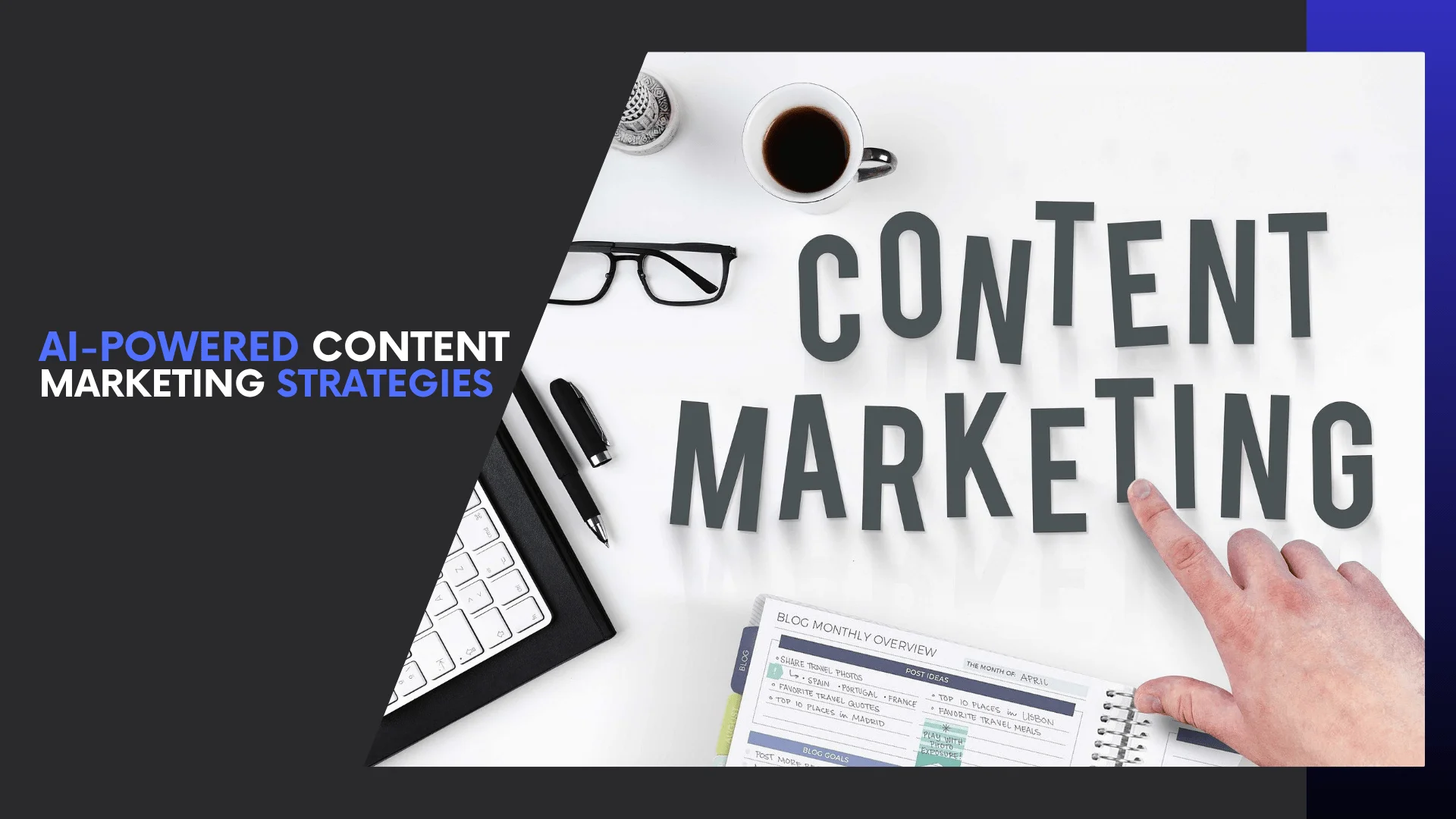
Imagine a content calendar that writes itself, campaigns adapting in real time, and visuals generated on demand — all optimized for conversion. This is not sci-fi. AI-Powered Content Marketing Strategies are becoming the engine behind explosive growth. Companies like HubSpot and Gartner report rapid adoption of AI across marketing teams, but only those with a strategic approach are seeing real results.
In this article, we’ll explore practical AI-Powered Content Marketing Strategies, highlight the latest AI content creation trends, showcase top generative AI tools for creators, and discuss the future of AI in content creation. You’ll get actionable insights, real examples, and authoritative references to implement immediately.
Next, let’s break down what “AI-powered” really means for your content strategy — and why mastering it now sets you up for massive growth in 2026.
What Are AI-Powered Content Marketing Strategies?
Before diving into tools and trends, it’s crucial to understand what AI-Powered Content Marketing Strategies actually are. Simply put, these are marketing strategies that leverage artificial intelligence to create, optimize, distribute, and measure content more efficiently and effectively than traditional methods.
At their core, AI strategies turn raw data into actionable insights. This includes:
- Content ideation: AI analyzes search trends, competitor content, and audience behavior to suggest topics that resonate.
- Content creation: Using generative AI tools for creators, marketers can produce blog posts, videos, graphics, and even social media posts in a fraction of the time.
- Optimization: AI automatically improves SEO, readability, and engagement based on real-time data.
- Personalization: Content is dynamically tailored to individual users, increasing conversion rates.
- Analytics & refinement: AI tracks performance, predicts trends, and recommends adjustments to campaigns before results decline.
Companies implementing AI-powered strategies aren’t just saving time—they’re achieving higher engagement, better SEO rankings, and measurable ROI. In fact, Salesforce reports that marketers using AI-powered strategies see a 59% improvement in customer engagement and a 54% increase in lead generation efficiency.

The Big Shift: AI Content Creation Trends Dominating 2026
The landscape of content marketing is evolving fast, and staying ahead means understanding the AI content creation trends that will shape 2026. These trends aren’t just buzz—they’re transforming how brands engage, convert, and scale their content efforts.
1. Hyper-Personalized Content
AI now enables marketers to create content tailored to individual user behavior and preferences. From email campaigns to website experiences, dynamic content personalization is becoming the norm. According to McKinsey, hyper-personalized campaigns can boost engagement by up to 20%.
2. Real-Time SEO Optimization
AI tools continuously analyze search trends, algorithm updates, and competitor content to optimize content as it’s published. Platforms like SurferSEO and Clearscope are already leveraging AI to provide real-time recommendations, ensuring higher visibility on Google SERPs.
3. Multimodal Content Generation
Content isn’t just text anymore. AI now generates videos, images, infographics, and even audio on demand. Tools like RunwayML and Pika Labs allow creators to produce high-quality visual and video content quickly, enabling consistent content pipelines without massive teams.
4. AI-Powered Micro-Content & Repurposing
Short-form content is king, and AI can repurpose long-form articles or videos into snippets, social posts, or reels, saving time while maintaining brand voice and consistency.
5. Predictive Content Planning
AI can forecast what topics will trend next, which allows marketers to plan content calendars months in advance. By analyzing historical data, audience behavior, and global trends, brands stay proactive rather than reactive.
These AI content creation trends illustrate that success in 2026 won’t just come from producing content—it will come from producing smarter, faster, and more personalized content than your competitors.
Generative AI Tools for Creators You Must Use in 2026
To turn the latest AI content creation trends into tangible results, marketers and creators need the right generative AI tools for creators. These tools streamline content production, improve quality, and allow teams to focus on strategy and creativity. Here’s a curated list of must-use tools in 2026:
1. ChatGPT & Jasper AI – Text & Copywriting
- Use cases: Blog posts, social media captions, email campaigns, ad copy.
- Why it matters: Generates high-quality content quickly, offers tone customization, and integrates with content workflows.
- Pro tip: Combine AI-generated drafts with human editing for authenticity.
2. RunwayML & Pika Labs – Video Creation
- Use cases: Short-form videos, ads, explainer videos.
- Why it matters: Enables creators to produce professional-quality videos without expensive software or production teams.
- Pro tip: Use AI to auto-generate captions and overlays for social optimization.
3. MidJourney & Leonardo.ai – Visuals & Graphics
- Use cases: Illustrations, social media visuals, infographics, marketing materials.
- Why it matters: AI-generated visuals reduce design bottlenecks and maintain brand consistency.
- Pro tip: Experiment with prompts to create unique, on-brand graphics that stand out.
4. Synthesia & Murf.ai – AI Voices & Audio
- Use cases: Voiceovers for videos, podcasts, audiobooks.
- Why it matters: Scales audio content production and enables multilingual campaigns effortlessly.
- Pro tip: Match AI voices with brand tone to maintain authenticity and audience trust.
5. Content Repurposing Tools – Lately.ai & Copy.ai
- Use cases: Repurposing blogs into social media posts, newsletters, or short-form content.
- Why it matters: Maximizes the ROI of every content piece while keeping output high.
By integrating these generative AI tools for creators, marketers can significantly reduce production time, increase consistency, and focus on strategic growth. The key is combining multiple AI tools into a seamless workflow that covers ideation, creation, optimization, and distribution.
How to Build an AI-Powered Content Marketing System
Creating content with AI isn’t just about using tools—it’s about building a system that consistently drives results. Here’s a step-by-step approach to develop an AI-powered content marketing system that maximizes efficiency and growth:
1. Define Your Audience & Goals
- Use AI-driven analytics tools like HubSpot AI or Google Analytics 4 to understand audience behavior.
- Segment your audience based on interests, demographics, and engagement patterns.
- Set clear goals: brand awareness, lead generation, conversions, or customer retention.
2. Conduct AI-Powered Research & Ideation
- Use AI to analyze competitors, trending topics, and search intent.
- Tools like BuzzSumo and Ahrefs AI can suggest content topics that resonate with your audience.
- Predict which formats—blogs, videos, infographics—will perform best.
3. Create Content with Generative AI
- Draft articles, social posts, or videos using tools like ChatGPT, Jasper AI, RunwayML, and MidJourney.
- Focus on quality over quantity; use AI for speed but maintain human oversight for brand voice and accuracy.
- Repurpose content for multiple channels automatically to maximize reach.
4. Automate Publishing & Distribution
- Schedule posts and campaigns using AI-driven platforms like Buffer AI or HubSpot AI.
- Personalize content dynamically for each segment using predictive algorithms.
- Track performance across channels in real time.
5. Measure, Optimize & Iterate
- Use AI analytics to evaluate engagement, conversion rates, and audience sentiment.
- Predict trends and adjust content strategies proactively.
- Continuously refine content creation and distribution workflows based on AI insights.
By implementing this system, marketers can save time, reduce costs, and scale their content efforts without sacrificing quality. Companies that master this approach consistently outperform competitors in traffic, engagement, and conversions.
Personalization at Scale: AI’s Secret Weapon
One of the most powerful advantages of AI-Powered Content Marketing Strategies is the ability to deliver personalized experiences at scale. Today’s audiences expect content that speaks directly to their needs, preferences, and behaviors—and AI makes this possible without manually crafting every message.
1. Dynamic Content Personalization
- AI analyzes user behavior, demographics, and engagement history to deliver tailored website pages, emails, and social media messages.
- Example: Netflix uses AI to personalize thumbnails and recommendations for each user, boosting engagement and retention.
2. Predictive Engagement Models
- By leveraging predictive analytics, AI can forecast what content a user is most likely to interact with next.
- Tools like HubSpot AI and Marketo AI automatically adjust messaging and offers, increasing the likelihood of conversions.
3. Real-Time Adaptive Campaigns
- AI can tweak campaigns in real time based on engagement metrics, seasonal trends, or user behavior.
- This ensures that your messaging is always relevant, improving click-through rates and overall ROI.
4. Benefits of Personalization at Scale
- Increased customer engagement and loyalty
- Higher conversion rates due to relevant messaging
- Improved efficiency—AI handles segmentation and delivery, freeing teams for strategy
By implementing AI-driven personalization, brands can create meaningful, one-to-one experiences without the need for massive teams or resources. In today’s competitive landscape, personalization isn’t optional—it’s a necessity.
Case Studies: Brands Exploding with AI-Driven Growth
Seeing theory in action makes the power of AI-Powered Content Marketing Strategies tangible. Here are a few real-world examples of brands leveraging AI to drive massive growth:
1. eCommerce Giant – Stitch Fix
- Challenge: Personalizing recommendations at scale for millions of users.
- AI Solution: Used predictive analytics and machine learning to tailor clothing suggestions.
- Results: Increased customer engagement by 25% and conversion rates by 20%.
2. SaaS Company – HubSpot
- Challenge: Scaling content production without overloading teams.
- AI Solution: Integrated ChatGPT and Jasper AI for blog posts, social media, and email campaigns.
- Results: Reduced content production time by 60%, while boosting organic traffic by 45%.
3. Media & Entertainment – Netflix
- Challenge: Keeping viewers engaged in a highly competitive streaming market.
- AI Solution: Personalized thumbnails, content recommendations, and localized content using AI-driven insights.
- Results: Improved retention rates and viewing time per user, strengthening brand loyalty.
4. Education Platform – Duolingo
- Challenge: Personalizing learning experiences for millions of learners worldwide.
- AI Solution: AI-driven content adaptation to match each learner’s pace and proficiency.
- Results: Boosted user engagement and course completion rates, scaling effectively without proportional staffing increases.
These case studies demonstrate that companies using AI-powered content marketing strategies aren’t just improving efficiency—they’re unlocking exponential growth. By integrating AI across creation, distribution, and personalization, brands stay ahead of competitors and future-proof their content strategies.

The Future of AI in Content Creation: What to Expect by 2030
As we move beyond 2026, the future of AI in content creation promises even more transformative changes. Marketers who stay ahead of these trends will be positioned to dominate their industries. Here’s what’s coming:
1. Real-Time Adaptive Content
- AI will generate content that adapts instantly to user behavior, location, and context.
- Websites, emails, and ads will dynamically change based on engagement patterns, making every interaction hyper-relevant.
2. Emotion-Driven AI Marketing
- Advanced AI will analyze sentiment and emotional cues to create content that resonates deeply with audiences.
- Brands will be able to trigger content variations that match user mood or intent, increasing engagement and trust.
3. AI + Blockchain for Authenticity
- With generative AI content becoming widespread, verifying authenticity will be critical.
- Blockchain integration will ensure that content is original, traceable, and credible, helping combat misinformation and AI-generated deepfakes.
4. Hyper-Automated Multimedia Creation
- AI will simultaneously produce text, video, audio, and visuals from a single input.
- This will make cross-channel campaigns effortless, allowing brands to scale content without sacrificing quality.
5. Human-AI Collaboration
- AI won’t replace human creativity—it will amplify it.
- The future of content creation lies in collaboration: AI handles repetitive tasks and optimization, while humans focus on strategy, storytelling, and innovation.
By embracing these developments, marketers can anticipate the next evolution of content creation, staying ahead of competitors and continually engaging audiences with innovative experiences.
Expert Tips to Stay Ahead of AI Content Trends
To fully leverage AI-Powered Content Marketing Strategies, marketers must stay proactive and continuously adapt. Here are actionable tips to stay ahead of AI content trends:
1. Continuously Learn & Experiment
- Follow industry leaders like Neil Patel, Marketing AI Institute, and HubSpot AI blog for updates.
- Test new tools and workflows on a small scale before full implementation.
- Experimentation ensures you understand what works best for your audience and niche.
2. Embrace Multi-Tool Workflows
- Combine multiple generative AI tools for creators for text, visuals, video, and audio.
- Create an integrated system for ideation, production, distribution, and measurement.
- Avoid relying on a single AI tool to cover all content needs.
3. Prioritize Personalization & Context
- Use AI to deliver dynamic, user-focused experiences.
- Leverage behavioral and predictive data to tailor content for maximum engagement.
- Always test personalized campaigns to measure performance.
4. Balance AI Efficiency with Human Creativity
- AI excels at speed and optimization, but humans provide storytelling, brand voice, and emotional resonance.
- Use AI-generated content as a foundation and refine it to ensure authenticity and originality.
5. Monitor Trends & AI Ethics
- Keep an eye on emerging AI content regulations and ethical guidelines.
- Ensure your AI-generated content maintains credibility, avoids plagiarism, and respects privacy.
By following these expert strategies, marketers can maximize the impact of AI content creation while staying ahead of competitors.
Conclusion: Prepare Now for the AI-Driven Content Revolution
The rise of AI-Powered Content Marketing Strategies is reshaping the marketing landscape. From AI content creation trends to generative AI tools for creators, the tools and strategies available today give forward-thinking marketers the ability to produce smarter, faster, and more personalized content than ever before.
2026 will be a defining year for brands that embrace AI systems, not just individual tools. By integrating AI across research, creation, distribution, and personalization, companies can scale content, improve engagement, and drive measurable growth. The future of AI in content creation promises even more innovation—real-time adaptive content, emotion-driven campaigns, and hyper-automated multimedia production.
Actionable Takeaway: Start implementing AI strategically now. Experiment with tools, create integrated workflows, and focus on personalization at scale. The brands that master AI content marketing today will dominate their industries tomorrow.
By adopting these strategies, you’re not just keeping up—you’re setting the stage for explosive growth in 2026 and beyond.