
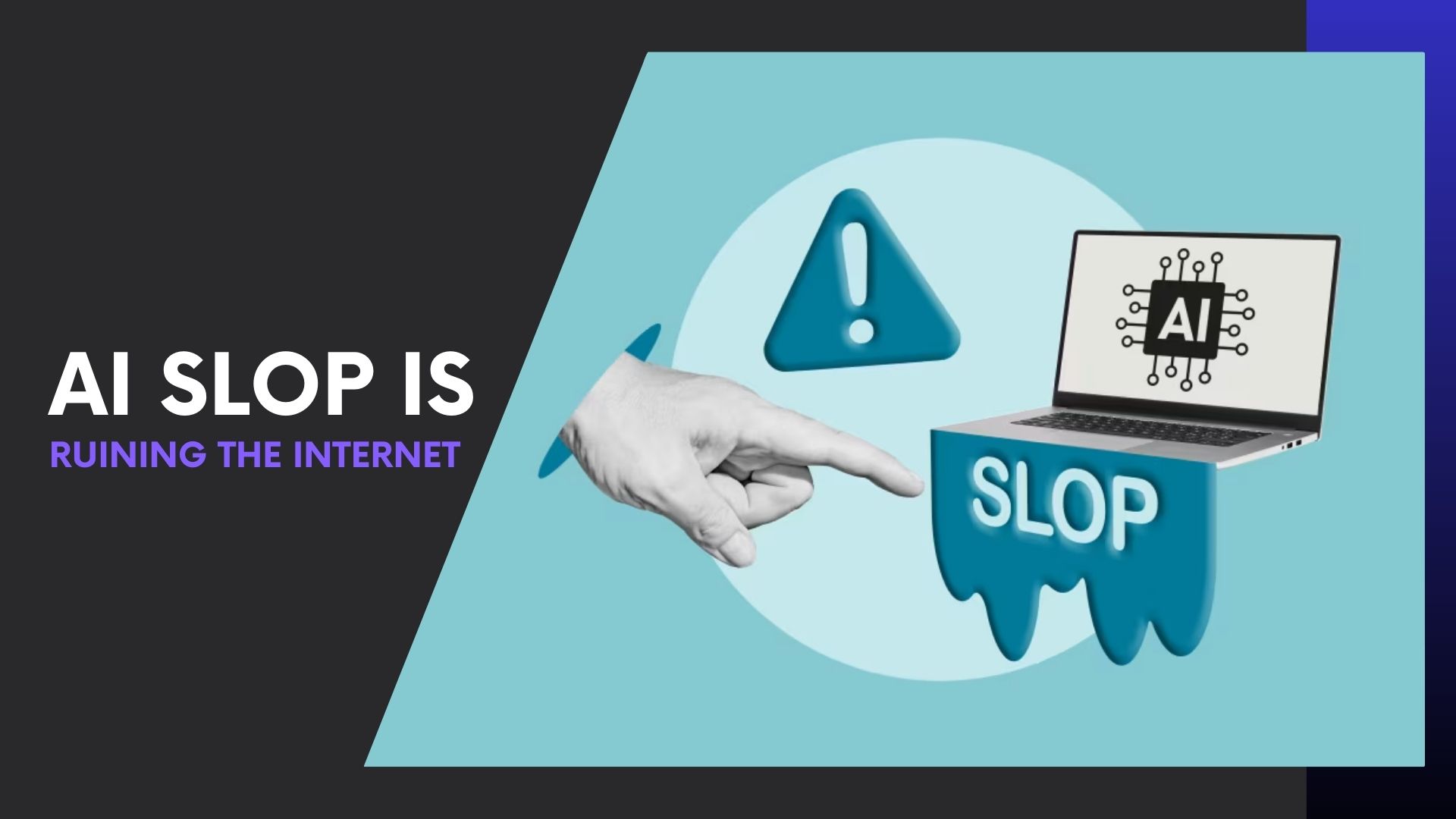
Scroll through the web today, and something feels off. Articles look polished but say very little. Answers feel accurate yet empty. This is the rise of AI slop—mass-produced, low-effort content created to satisfy algorithms, not people.
Unlike helpful AI-assisted writing, AI-generated content spam floods search results with repetitive pages, fueling low-quality AI content at an unprecedented scale. The result is AI content pollution, where originality and expertise get buried under volume.
This isn’t just an SEO issue. AI slop is reshaping how information is created, ranked, and trusted—and most people don’t realize it yet.
What Is AI Slop?
AI slop refers to large volumes of shallow, repetitive, and unoriginal content generated by AI systems with minimal or no human oversight. Its primary goal isn’t to inform or help readers—it’s to rank, scale, and monetize.
Unlike high-quality AI-assisted writing, AI slop lacks:
- Original insight or firsthand experience
- Depth, nuance, or critical thinking
- Clear intent beyond search visibility
Most AI slop falls under low-quality AI content because it rephrases what already exists, often pulling from the same sources, templates, and prompts. When published at scale, it becomes AI-generated content spam, clogging search results with pages that look useful but offer little real value.

How AI Slop Took Over the Internet So Fast
The rapid spread of AI slop wasn’t accidental—it was inevitable. Once AI tools made content creation cheap and instant, volume became the strategy.
Here’s what accelerated the takeover:
- Mass adoption of AI writing tools enabled anyone to publish at scale
- Programmatic SEO turned keywords into thousands of auto-generated pages
- Affiliate and ad-driven sites prioritized speed over substance
- Weak editorial oversight allowed AI-generated content spam to multiply
Because search engines reward freshness and coverage, low-quality AI content often ranks before better-written human content—at least temporarily. At scale, this creates AI content pollution, where repetitive pages dominate results simply by existing in bulk.
Speed, not quality, became the winning formula—and that’s how AI slop flooded the web.
AI-Generated Content Spam vs Helpful AI Content
Not all AI-written content is bad. The real problem is AI-generated content spam—and it’s important to separate it from genuinely helpful AI-assisted work.
Here’s the key difference:
Helpful AI content
- Starts with a clear user intent
- Is edited, validated, and shaped by a human
- Adds original insights, examples, or experience
- Uses AI as a support tool, not a replacement
AI slop
- Exists purely to rank or monetize
- Is fully automated and rarely reviewed
- Repeats the same ideas found everywhere else
- Prioritizes keywords over clarity
Most low-quality AI content looks fine at first glance, but quickly reveals itself through vague explanations and recycled phrasing. When published at scale, this turns into AI content pollution, where useful information is drowned out by noise.
AI isn’t the villain here—misuse at scale is.
The Hidden Damage: AI Content Pollution
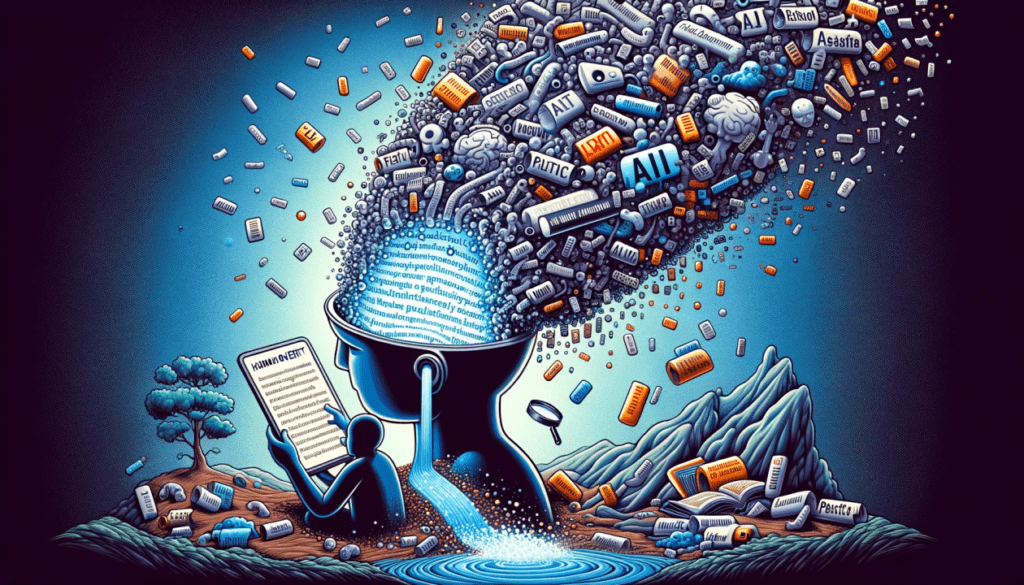
The real harm of AI slop isn’t just bad articles—it’s what happens to the entire information ecosystem. When massive volumes of AI-generated content spam flood the web, they create AI content pollution, where signal is buried under noise.
This pollution has real consequences:
- Search results become repetitive and less trustworthy
- High-effort content struggles to compete with bulk output
- Readers waste time sorting through low-quality AI content
- New creators find it harder to get visibility
Over time, this erodes confidence in online information itself. When every answer looks the same, expertise loses value. AI slop doesn’t just lower content standards—it changes what the internet rewards, quietly pushing quality to the margins.
Why Google Can’t Fully Stop AI Slop (Yet)
Despite constant updates, Google hasn’t eliminated AI slop—and there’s a reason for that. The problem isn’t identifying AI-written text; it’s identifying bad intent at scale.
Search engines don’t penalize content for being AI-generated. They penalize low-quality AI content that exists solely to manipulate rankings. But at volume, AI-generated content spam can still slip through because it often:
- Looks structurally correct
- Uses proper formatting and keywords
- Mimics helpful content on the surface
This creates an arms race: detection systems improve, while AI slop becomes harder to distinguish from legitimate content. Until intent and experience are easier to measure algorithmically, AI content pollution will continue to leak into search results—especially in competitive niches.
How to Spot AI Slop in Seconds (Before You Waste Your Time)
You don’t need advanced tools to identify AI slop. Most low-quality AI content gives itself away almost immediately once you know what to look for.
Here are the most reliable red flags:
- Generic openings and endings that say a lot but explain little
- No firsthand experience, original examples, or personal insight
- Repetitive phrasing that feels templated or overly polished
- Overuse of subheadings designed for SEO, not clarity
- Vague claims with no data, sources, or real-world context
Much of this content exists as AI-generated content spam—pages built to rank, not to inform. When multiplied across thousands of sites, it fuels AI content pollution, making it harder to find content written with genuine expertise and intent.
If a page feels empty despite its length, it’s usually AI slop.
The Creators Who Benefit From AI Slop (And Why It Works)
If AI slop is so bad, why does it keep spreading? Because—for now—it’s profitable.
Several groups actively benefit from AI-generated content spam:
- Affiliate sites that publish thousands of pages to capture long-tail keywords
- Programmatic SEO networks built entirely on automation
- Ad-driven publishers chasing impressions over trust
These creators rely on volume. Even if most pages are low-quality AI content, a small percentage ranking is enough to generate revenue. Search engines may eventually demote them, but the short-term gains often outweigh the risk.
At scale, this behavior accelerates AI content pollution, rewarding speed and quantity over originality. As long as incentives favor output over value, AI slop will continue to work—until the system fundamentally changes.
The Long-Term Consequences No One Is Discussing
The danger of AI slop isn’t immediate—it’s cumulative. As AI-generated content spam continues to scale, the web slowly becomes harder to navigate, trust, and rely on.
Over time, AI content pollution leads to:
- Search fatigue, where users stop clicking organic results
- Declining visibility for expert-driven, experience-based content
- Lower trust in blogs, reviews, and informational sites
- Increased dependence on closed platforms and AI summaries
When low-quality AI content dominates, originality becomes rare and expensive. If left unchecked, the internet risks shifting from a knowledge network into a shallow content loop—where information exists everywhere, but insight exists almost nowhere.
How to Use AI Without Creating AI Slop
Avoiding AI slop doesn’t mean rejecting AI—it means using it with intent and restraint. The difference lies in how AI is applied.
Here’s how creators can use AI without contributing to low-quality AI content:
- Use AI for research, outlining, or summarization, not final output
- Inject firsthand experience, opinions, and real examples
- Edit aggressively to remove generic phrasing and filler
- Write for a specific reader problem, not just a keyword
When AI is treated as an assistant rather than a content factory, it enhances quality instead of creating AI-generated content spam. This approach reduces AI content pollution and aligns with what search engines increasingly reward: usefulness, originality, and human judgment.
AI isn’t the issue—unchecked automation is.

The Future of Content After AI Slop
The era of easy wins with AI slop is already shrinking. As AI-generated content spam saturates the web, platforms and search engines are being forced to adapt.
What’s likely ahead:
- Stronger emphasis on experience, expertise, and originality
- Greater visibility for trusted brands and individual creators
- Tighter quality thresholds that push out low-quality AI content
- Reduced tolerance for AI content pollution at scale
In this next phase, fewer pages will rank—but better ones will. AI will still play a role, but only when guided by human judgment. The future of content belongs to creators who add perspective, not just production.
Quality won’t disappear. It will simply become more valuable again.
Final Takeaway: AI Slop Isn’t Inevitable
AI slop didn’t ruin the internet overnight—and it doesn’t have to define its future either. The real issue isn’t AI itself, but how easily AI-generated content spam and low-quality AI content are rewarded at scale. Left unchecked, this leads to AI content pollution that buries originality, expertise, and trust.
But the path forward is clear. Search engines are tightening standards, readers are becoming more selective, and creators who focus on real value—not volume—are already standing out.
The internet isn’t broken. It’s overcrowded. And the content that survives next won’t be the loudest or fastest—it will be the most useful.