
Apple just delivered a blockbuster quarter—but Apple AI monetization remains the question no one seems eager to answer.
When Apple reported its latest quarterly earnings, the numbers looked stellar. The company posted $143.8 billion in revenue, marking a 16% year-over-year increase and reinforcing its position as the most financially disciplined giant in Big Tech.
Yet amid the celebratory tone of the earnings call, one analyst dared to poke the elephant in the room.
Morgan Stanley’s Erik Woodring asked what many investors quietly wonder but rarely say out loud: How exactly does Apple plan to monetize AI?
It’s a fair question. Apple has been steadily weaving artificial intelligence into iOS, macOS, and its services stack. At the same time, competitors like Google, Microsoft, and OpenAI are openly betting billions on AI—often without a clear path to profitability. That makes Apple AI monetization a topic investors are increasingly eager to understand.
Woodring framed the issue bluntly. AI clearly brings higher infrastructure and development costs, he noted, but it’s still unclear how much incremental revenue AI actually generates for device makers. So where does Apple expect returns to come from?
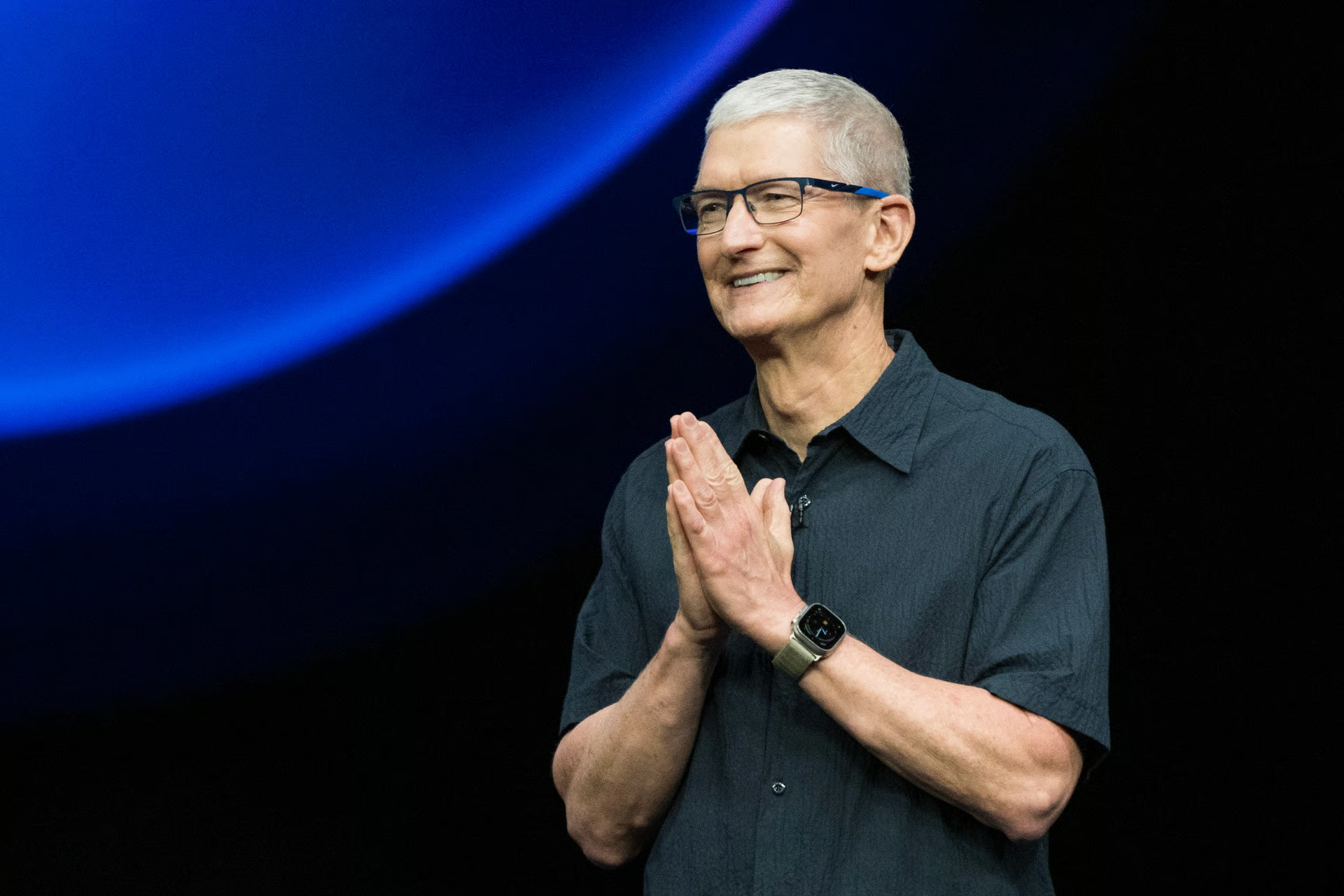
Tim Cook’s answer was, diplomatically speaking, vague.
Cook said Apple is “bringing intelligence to more of what people love” and integrating AI across its operating systems in a “personal and private way.” According to him, that approach creates “great value,” which then opens up future opportunities across Apple’s products and services.
In other words, Apple AI monetization isn’t about charging directly for AI features—at least not yet. Instead, Apple appears to be treating AI as a value multiplier: something that strengthens the ecosystem, boosts device loyalty, and makes premium pricing easier to sustain.
That strategy sharply contrasts with companies like OpenAI, which has embraced subscriptions and enterprise licensing despite massive ongoing losses. Even with ChatGPT’s cultural dominance, OpenAI doesn’t expect to turn a profit until well into the next decade.
Apple, by comparison, can afford patience. With hardware margins, services revenue, and one of the world’s largest cash reserves, the company doesn’t need AI to be an immediate standalone business. Instead, Apple AI monetization may happen quietly—through higher iPhone retention, expanded services usage, and future AI-powered features that justify premium pricing.
Still, the lack of specificity was telling. Investors aren’t just curious about AI innovation anymore—they want to see how the math works.
For now, Apple’s answer seems to be: build intelligence first, monetize later. Whether that approach satisfies Wall Street in the long run remains an open question.
At least someone finally asked it.

Don’t miss out on our latest news—follow us for the latest AI news, breakthroughs, and insights that ma